Meningococcal disease
Bacteria (often Neisseria meningitidis) can inflame the membranes around the brain and spinal cord, or invade the blood. Speed of treatment decides survival.
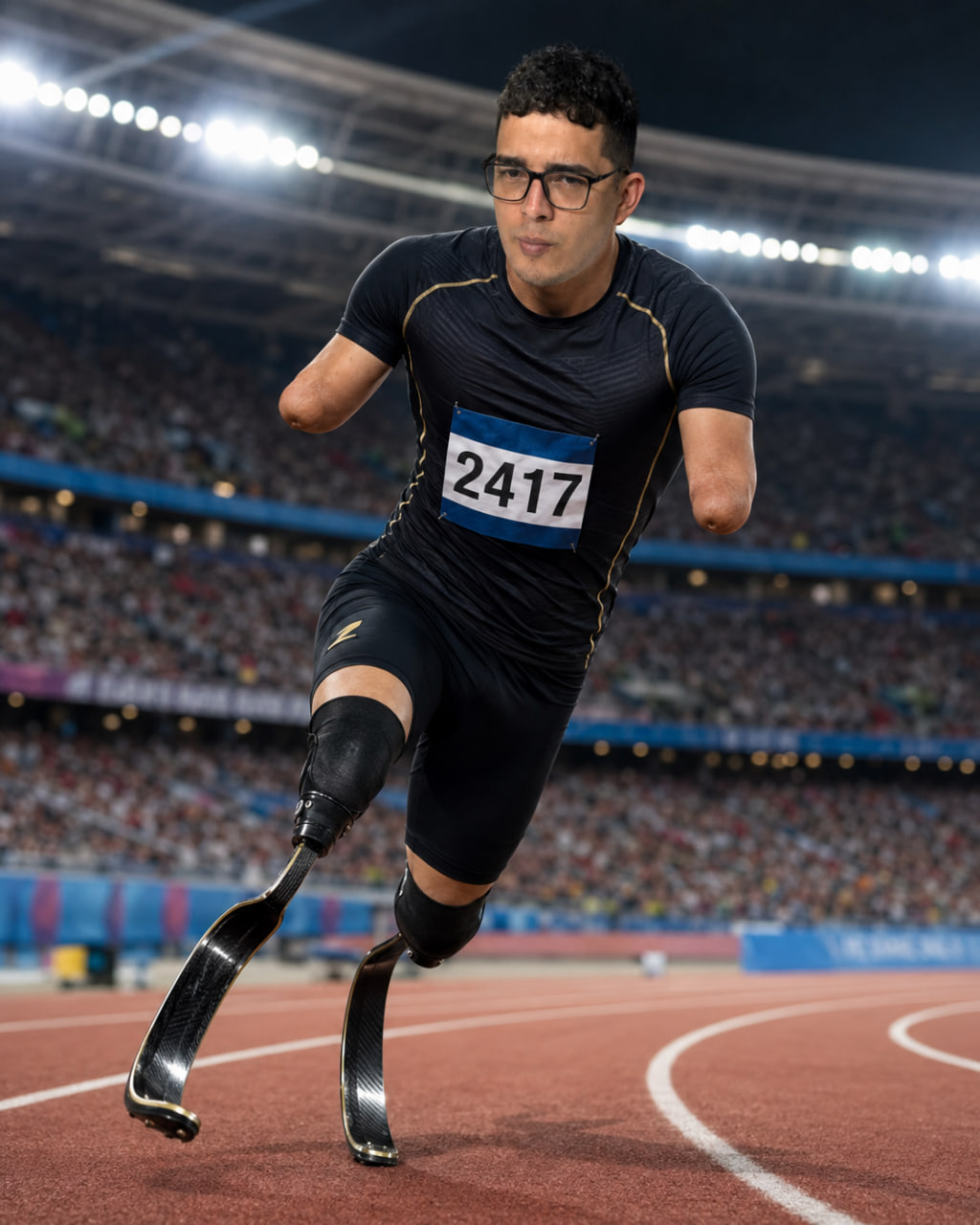 DBEDBK · Venezuela
Meet Ronald
Handsome. Fierce. Funny. A quadruple amputee who turns everyday life into proof that the body is not the limit — the story is.
Who he is
DBEDBK means double below-elbow, double below-knee — residual limbs on all four sides. Ronald lost his hands and feet after a catastrophic illness as a toddler. What remains is a man in his thirties: sharp face, athletic build, playful energy, and stumps he has learned to live with when the world offered almost nothing.
There is no second Ronald in this shape, this age, this charisma, filming from a country where opportunity is scarce and the lights go out. That rarity is not tragedy theater — it is presence. People stop scrolling for him. They should also stay for him.
The origin
When Ronald was three years old, he developed meningococcemia (severe meningococcal disease). Infection can race through the bloodstream, trigger septic shock, and cut off circulation to the extremities. Skin darkens. Tissue dies. To save a life, surgeons sometimes have no choice but to amputate what the bacteria and the lack of blood already destroyed.
That is how a child becomes a quadruple amputee before he can fully understand the word. The disease took limbs. It did not take his face, his humor, his will to be seen as a man — not a charity poster.
Bacteria (often Neisseria meningitidis) can inflame the membranes around the brain and spinal cord, or invade the blood. Speed of treatment decides survival.
In septic shock, blood vessels clamp down. Fingers, toes, hands, feet can become necrotic. Amputation is not “optional style” — it is aftermath of saving the person.
Residual limbs (stumps), scars, phantom memory of a body that used to reach farther — and a lifetime of workarounds the average person never has to invent.
This page is Ronald’s space. Medical facts here are general education, not a diagnosis for anyone else. If you need clinical advice, talk to a doctor. If you want Ronald’s life — stay and watch how he does the ordinary extraordinary.
Coming chapters
Real routines. Real light. No pity script — just the methods, the mess, and the pride.
Floors, dishes, dust — the choreography of residual limbs and stubbornness.
Morning ritual, grip hacks, and the quiet dignity of self-care.
Shirts, pants, shoes or no shoes — independence is a sequence, not a miracle.
Sockets, skin care, blades, and days when the body just hurts.
Venezuela kitchen reality — rice, heat, creativity, and feeding yourself.
Power cuts, blocked platforms, inventing income when doors stay closed.
What kids say. What adults assume. What you learn about yourself anyway.
Walking, balancing, falling, getting back up on residual limbs.
Meningitis at three. Thirty years later. Still here. Still building.
Support Ronald
Food, power, prosthetics, and the next film all start with someone deciding he is worth investing in. Donate freely — or commission something made just for you.
Help Ronald eat, stay online, and keep building this project from Venezuela. Every dollar goes to him — not a middleman.
Donate with PayPal Other ways to helpWant a custom video or photo set? Day-in-the-life, stump care, private request — tell him what you want and he will quote a price.
Request special content How requests workPayPal: miandy366@gmail.com · José Román · You can also write anytime — he reads every message he can.